
明日之星
欧洲高温野火“引爆”一战二战期间遗留休眠炸弹,德国耗费巨资购无人坦克应对,红星新闻,欧洲高温野火“引爆”一战二战期间遗留休眠炸弹,德国耗费巨资购无人坦克应对_我的网站

A |
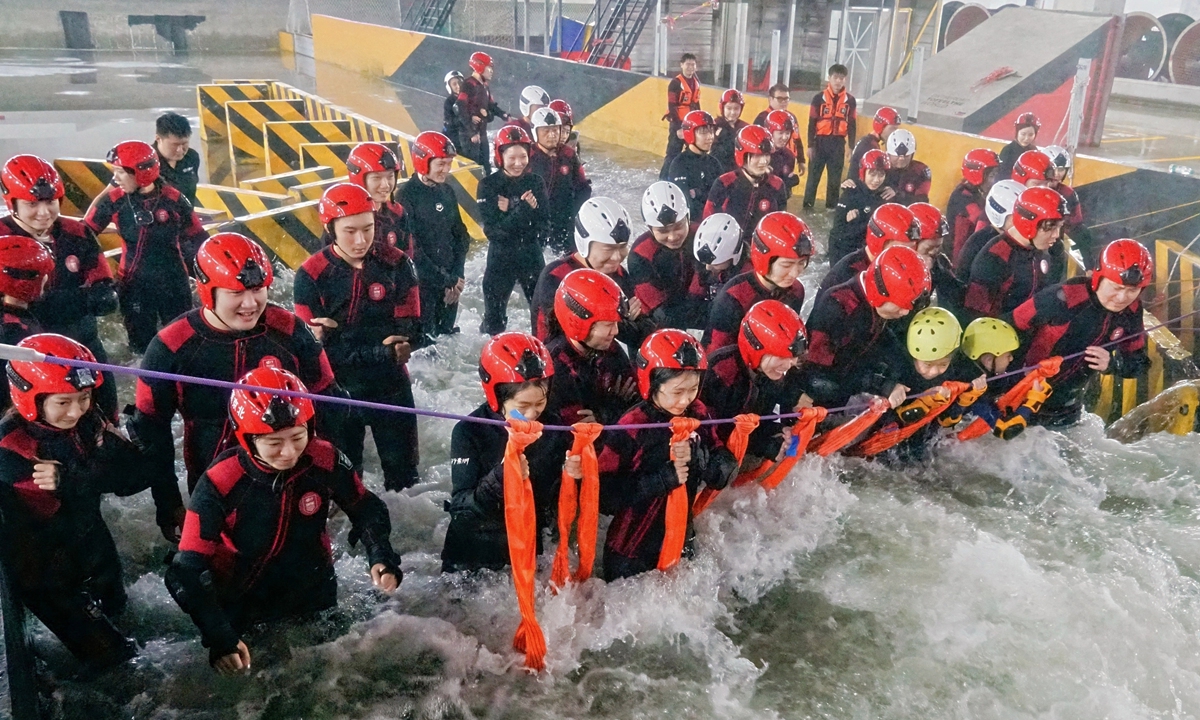
As heavy rain associated with Typhoon Dolphin continued to affect large parts of China, an increasing number of people were turning to immersive disaster simulations to experience extreme weather scenarios in a controlled environment at the Lvxing Disaster Simulation Training Center in Hangzhou, East China's Zhejiang Province.
At the country's first natural disaster simulation venue, adult participants pay 899 yuan ($133) per person to virtually confront situations such as typhoons, urban flooding and sudden flash floods, to gain a sense of what such emergencies might feel like.
Wang Kuanghan, operator of the training center, told the Global Times that the center is designed to allow people to experience the dangers of natural disasters in a safe and controlled environment, while raising awareness of the need to respect nature and avoid potential risks.
"We hope to pass on the experience we gained from encountering natural disasters during our years of traveling around the world," Wang said. "Beyond teaching people how to respond when natural disasters strike, what is more important is cultivating an awareness of how to avoid risks."
As of July, the center had received more than 70,000 visits this year for hands-on experiences, including tourists as well as companies and professional rescue teams that come for training. The number is higher than the same period in 2025, he noted.
Fu Minya, a Hangzhou-based office worker, told the Global Times that she has heard of the center and would like to give it a try.
"The frequent news reports of natural disasters in recent weeks have reminded people of how small and vulnerable we are in the face of nature's forces," she said.
After Typhoon Dolphin made landfall in China in early August, its remnant impact brought downpours to several provinces. Chinese authorities previously earmarked 80 million yuan to support flood and geological disaster relief efforts in the Central China's Henan and Hubei provinces and East China's Anhui Province, the Xinhua News Agency reported.
The flash flood simulation is one of the most intense experiences the center offers. Participants stand in a simulated river channel as an instructor presses a button, releasing around 500 tons of water from above. Within just three seconds, many participants are knocked off their feet, left tumbling in the rushing water and being swept toward the protective wall at the end of the channel.
"Real flash floods move even faster," said Wang. "When the water rises above knee level, it is almost impossible for an adult to remain standing. Many people instinctively think they should swim to escape, but that can be fatal."
Flash floods carry mud, branches and rocks that can quickly entangle your arms and legs. The right thing to do is to watch for warning signs of an impending flash flood, move away from the riverbank before the flash flood occurs, and quickly evacuate to higher ground on either side, he said.
In another exercise, several participants slog ahead holding each other's arms as the facility simulates winds reaching speeds of up to 165 kilometers per hour, as well as torrential rain.
However, there are concerns that simulated disasters could trivialize the suffering of disaster victims and turn the trauma of real-life disasters into entertainment.
This is a promising new niche in urban cultural tourism, Yu Jinlong, a Beijing-based cultural scholar, told the Global Times on Wednesday.
By striking the right balance between entertainment and public education while strictly adhering to safety protocols, such facilities can become more than just viral check-in destinations; they can serve as a replicable platform for public emergency education, Yu noted.
In the past, disaster-prevention education largely relied on display boards and lectures, which often made it difficult for people to develop an intuitive understanding of the dangers involved, Yu said.
Real-life simulations, by contrast, allow participants to experience firsthand the destructive force of typhoons and flash floods, turning abstract knowledge into tangible memories. This is where such facilities can offer unique social value, making them particularly suitable for educational programs for young people and emergency-response training for businesses and institutions, he said.
The experience can be impactful, but it should not be reduced to a sensationalist spectacle. Only by combining immersive experiences with practical self-rescue training and maintaining strict safety standards can this emerging model continue to serve as a meaningful platform for public disaster-prevention education, Yu noted.
Statistics show that 95 percent of people rescued from natural disasters survive through self-rescue, Wang said. "If you are swept away by water or hit by strong winds here, you will develop a much deeper understanding of how to respond to hazards and protect yourself."
。 一直以来,欧洲相对稳定的气温和降雨确保了大多数埋藏在地下的武器保持休眠状态。

B | 但今年欧洲经历了完全不同的气候变化。

C | 1月的大雨加速植被生长,而夏季的高温又使植被变得极易燃烧。世界天气归因组织称,欧洲今夏的高温加上干旱、低湿度和强风,为长时间的火灾提供了理想的环境。 ▲2026年8月17日,在比利时瓦伊姆斯附近,被野火烧焦的田野上冒出滚滚浓烟 一般来讲,普通地表火焰可能持续时间不够长,不一定能够把地下弹药加热到危险程度;但如果火势持续数小时甚至数天,或者火焰向干燥的泥炭层、枯枝落叶层和土壤深处蔓延,就可能让热量逐渐传递到地下。弹药经过几十年腐蚀以后,弹体、引信等部件的状态已经与出厂时不同,某些情况下反而可能更加不稳定。 比利时、法国、德国多地炮弹、地雷等弹药爆炸 在比利时东部列日省茂密的泥炭沼泽森林中,二战期间遗留的炸弹和地雷遍布。这片森林横跨比利时与德国的边境,曾是血腥的阿登战役在内的多场重要战役的发生地。 在今年夏天,该地区燃起熊熊大火。省长埃尔韦·贾马尔表示,近日听到“零星爆炸声”,应急部门正在调整应对措施,以应对火灾区域内埋藏的弹药。 ▲当地时间2026年8月15日,德国迪伦,消防员正在许特根瓦尔德森林火灾现场扑灭热点。

D | 这场大火迄今已烧毁200多公顷土地,成为北莱茵-威斯特伐利亚州有史以来最大的野火(图据视觉中国) 在法国西南部城市波尔多郊外一片干燥的森林中,一场大规模野火让人们也发现了二战时期的400枚炮弹,主要为迫击炮弹,以及一些高爆反坦克炮弹。 当地消防指挥官托马斯·米米亚格表示,火灾期间听到的爆炸声可能是炮弹爆炸。当地市长马歇尔·扎尼内蒂称,“我们市辖区内埋藏着弹药库,但我们并不知道,结果它们爆炸了。其中一枚弹药的碎片穿过了一栋房子,超过180栋房屋被大火烧毁。” ▲当地时间2026年8月17日,德国萨克森州海德瑙,易北河皮尔纳附近发现一枚二战遗留炸弹并成功拆除(图据视觉中国) 在欧洲发现未爆炸弹药并不罕见。比利时爆炸物处理和销毁部门每年在全国范围内会接到3000多起求助电话,并处理200至250吨两次世界大战遗留的弹药。 通常情况下,这些炸弹会被小心处理,要么被拆除,要么被有意地、精确地引爆。但野火的高温会引爆炸药,使情况变得无法控制。 ▲当地时间2026年7月2日,德国巴登-符腾堡州斯图加特,一枚二战遗留航空炸弹被发现(图据视觉中国) 德国勃兰登堡州森林茂密,大片区域曾是前东德的训练场,据信近20%的土地上藏有旧弹药。在今年夏天,这里的一场森林火灾,造成附近村庄约2000人撤离,消防工作也因为地下未爆弹药而受到严重限制。 德国花350万美元买遥控坦克应对 德国全球火灾监测中心负责人约翰·戈尔德哈默表示,持续的高温干旱和老旧弹药的劣化增加了炸弹爆炸的可能性。土壤的周期性冻融也会将旧弹壳带到地表,就像花坛里每年冬天都会冒出新的石头一样。 为了应对这一情况,当地政府耗资350万美元购买了两辆遥控坦克,一辆配备抓取臂和可喷射180英尺水柱或泡沫的消防水带,另一辆则负责犁地清除植被,还有一辆供操作员乘坐的装甲车。这样,消防员就能够到达拆弹小组尚未检查过的区域,以便他们能够开辟防火隔离带。

E | 巴特表示,控制德国的野火需要的是深层次的改革,用混交林取代易燃的松树林会有所帮助。加快探测和清除旧弹药的进程也同样重要,他悲观地表示:“或许100年后我们就能做好准备。”返回,查看更多。
Current article:http://wd1b.diuhuairandaikaomangshangnen.buzz/news/20260826_943.html
Published on:00:00:00