千山暮雪
Chinese shipping company set to launch regular Arctic service_我的网站

A | 国务院修订《住房公积金管理条例》自2026年9月20日起施行,近期多地密集出台公积金新政,从降低购房门槛、拓宽提取范围等多维度发力,支持住房消费满足多元化需求。
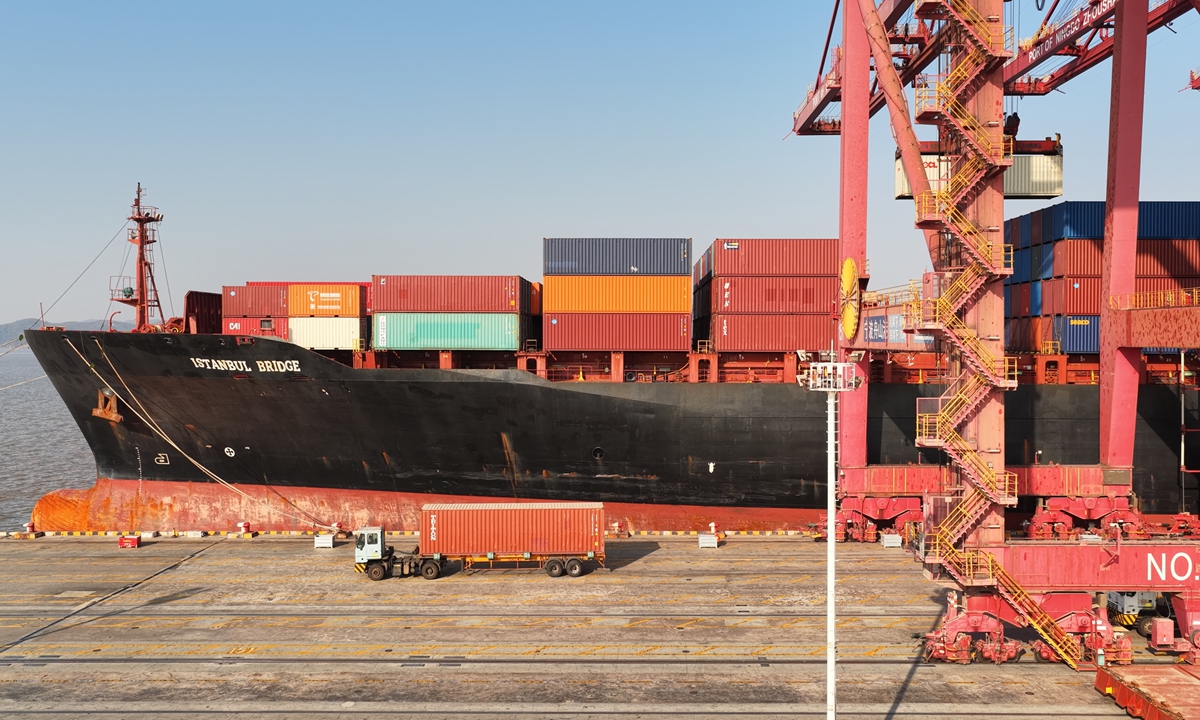
A Chinese shipping company is set to launch a regular container service to Europe via Russia's Northern Sea Route, probably this week, with eight weekly sailings planned during this year's Arctic navigation season - part of a broader push by Chinese carriers to move Arctic shipping from sporadic voyages toward larger-scale and more regular commercial operations.
The service is expected to add a faster supplementary corridor for Eurasian trade, shortening voyages between Chinese ports and key Baltic gateways by nearly one-third, as businesses seek more diversified and resilient supply chains amid rising risks along traditional maritime routes, industry analysts said.
Sea Legend Shipping is launching its 2026 China-Europe Arctic Express, or CAX, service this month. According to the company's published schedule, the service will run eight fixed weekly sailings from August 15 through October 3, using seven vessels and targeting transit times of around 20 to 22 days, according to media reports.
Unlike previous Arctic container voyages that were largely arranged as individual sailings, the new service has fixed departure dates, dedicated vessel deployment and a planned transit time, effectively putting the commercial repeatability of Arctic container shipping to the test, analysts said.
From a single-voyage test in 2025 to regular weekly sailings during the 2026 Arctic navigation window, CAX is entering a much broader test of commercial operations. Chinese experts said the start of regular services carries multiple implications, from diversifying shipping routes and reducing exposure to geopolitical risks, to supporting regional trade cooperation and economic development.
The new service will consolidate cargo from multiple Chinese ports before calling at Ningbo-Zhoushan Port and sailing for Felixstowe in the UK, with connections to other European ports including Rotterdam, Netherlands, Wilhelmshaven in Germany, and Poland's Gdynia, according to an article published by Chinese maritime industry portal CNSS.
According to media report, Sea Legend has deployed seven container vessels ranging from 1,384 to 4,890 twenty-foot equivalent units, or TEUs. The first sailing is to be operated by the Dubai Tower, which had originally been scheduled to leave Ningbo on August 15 and due to arrive at Felixstowe on September 7, according to the company's published CAX schedule.
Russia's state atomic energy corporation Rosatom has issued permits for seven Sea Legend vessels to transit the Northern Sea Route, RT reported on August 8, citing Rosatom CEO Aleksey Likhachev.
More than a shortcut
Traditional shipping routes still hold advantages in capacity, infrastructure and established networks, but rising geopolitical tensions have pushed up fuel and operating costs on some corridors, while tighter control over key ports has added to concerns over global shipping security, said Hu Qimu, a professor at the Maritime Silk Road Institute of Huaqiao University.
"Against this backdrop, developing alternative corridors and building a more diversified shipping network have become an increasingly necessary choice," Hu told the Global Times on Tuesday.
Growing trade between East Asia and Europe is providing another source of momentum. As a rising share of China's exports consists of higher-value advanced manufactured products, new Eurasian transport corridors have a stronger cargo base on which to develop, Jian Junbo, director of the Center for China-Europe Relations at Fudan University's Institute of International Studies, told the Global Times.
The Arctic's naturally low temperatures can also be suitable for the transport of certain high-value goods, including photovoltaic products, energy-storage equipment and precision electromechanical products, helping reduce some temperature-related transport risks.
According to the CNSS report, Sea Legend has said the route targets cargo including lithium batteries, photovoltaic products, new-energy vehicle components and cross-border e-commerce goods - time-sensitive, higher-value products for which delivery times and inventory turnover can carry considerably greater economic weight than for low-value, time-insensitive bulk cargo.
The appeal of the Arctic route also lies in its shorter transit time, Jian said. A shorter voyage can reduce overall logistics costs, improve cargo turnover, shorten delivery cycles and allow companies to organize production and supply chains more efficiently.
Industry calculations cited by CNSS estimate that the route can shorten the sailing distance on some Northeast Asia-Northern Europe services by about 30 percent to 40 percent compared with conventional maritime routes via the Suez Canal or the Cape of Good Hope.
Sea Legend tested the viability of faster Arctic shipping with a single voyage last year. Its vessel the Istanbul Bridge departed Ningbo-Zhoushan Port in September 2025 and reached Felixstowe in about 20 days, despite reducing speed due to severe weather in the Norwegian Sea. The vessel carried mainly new-energy vehicles, lithium batteries and photovoltaic products, the Xinhua News Agency reported.
The expansion goes beyond Sea Legend. China's first batch of Arctic sailings for 2026 involves six carriers, including NewNew Shipping, Ningbo Hongkun Shipping, Dalian Trawind Shipping, Tianjin Yueqian Shipping and Shanghai Dahua Shipping, deploying container ships, dry-bulk carriers and multipurpose vessels during the summer navigation window, according to the China Shipowners' Association.
Despite the progress, the larger-scale development of Arctic shipping still faces constraints, including a seasonal navigation window, relatively limited container capacity and less-developed support infrastructure. But experts said its broader value lies not in matching the scale of traditional routes, but in adding another option to an increasingly complex global logistics network.
Tech Times highlighted that the key difference in 2026 is Sea Legend's plan for eight consecutive weekly departures, which could help build the operational experience and booking confidence that a single voyage cannot provide.
。其中,成都创新性推出“最低首付15%”叠加“贷款利息补贴”的组合政策,被业内视为二线城市政策力度的“第一梯队”;郑州拟将物业费、取暖费、车位管理费等新增纳入提取范围,进一步释放存量住房消费潜力。

B | 成都:首付15%叠加利息补贴,精准降低持有成本 8月25日,成都市住建局等4部门联合发布稳楼市新政,从四个方面出台10条措施。在支持住房消费方面,除鼓励区(市)县发放购房补贴外,住房公积金支持力度明显加码:购买本市新建商品住房,公积金贷款最低首付比例降至15%;同时给予一年期、20%的贷款利息补贴,补贴金额最高不超过2.5万元。

C | 此外,购买达到绿色建筑一星级及以上标准的新建住房,公积金最高贷款额度上浮20%。

D | 中指研究院成都公司总经理黄雪认为,本次政策最具含金量的部分集中在公积金领域。“首付15%叠加利息补贴,是全国性组合中的‘新范式’。”她表示,当前5年以上首套公积金利率已降至2.6%的历史低位,成都再叠加20%的利息补贴,“低成本+低首付”的双重让利,对刚需群体尤其是青年人群、首次置业家庭的入市意愿拉动明显。 不同于多数城市采用的“契税补贴”或“总价补贴”模式,成都直接补贴资金占用成本最高的利息端。在黄雪看来,成都政策精准度更高、让利预期更为明确。同时,额度上浮20%与绿色建筑标准挂钩,既支持改善性需求,又引导产品升级方向,与国家倡导的“好房子”建设导向相衔接。 黄雪预计,公积金“首付15%+利息补贴”直接降低了购房门槛和持有成本,叠加各区(市)县将陆续落地的购房补贴和消费券,传统“金九银十”行情值得期待。参考历史规律,信贷支持与财政补贴的组合拳通常在政策落地后1至2个月进入集中释放期,预计成都短期成交量回升具备较强确定性。 多地拓宽提取范围,覆盖物业费、装修、车位等场景 8月10日,国务院发布《关于修改〈住房公积金管理条例〉的决定》(以下简称《决定》),自2026年9月20日起施行。拓宽公积金提取范围是该《决定》的重点内容之一。在此背景下,多地加快跟进落实。 近日,郑州发布征求意见稿,拟优化调整公积金提取政策,包括新增自住住房物业费、取暖费、车位管理费提取业务,新增购房契税提取业务,同时取消购房提取的地域和住房套数限制。 据证券时报·券商中国记者梳理,8月以来,为更好满足缴存人多样化住房消费需求,多地密集优化公积金提取使用范围。

E | 北京明确对自住住房进行装修装饰可申请提取公积金;威海支持提取公积金支付住宅专项维修资金、契税、物业费及取暖费;汉中则进一步将装修、车位、物业费、契税及住宅专项维修资金全部纳入提取范围。此外,南宁、通辽、玉溪、珠海等地也分别就自住房装修、更新改造及物业费等场景出台公积金支持新政,并于8月正式实施。 业内人士指出,公积金政策已成为各地促进住房消费的重要政策工具。随着政策持续向租、购、修、养全周期多样化住房消费倾斜,预计未来公积金相关政策将继续保持高频落地,更多城市有望跟进拓宽提取范围。 投资范围扩至政策性金融债,长期利好债市机构配置 针对《决定》将公积金投资范围由国债扩展至政策性金融债,西南固收团队分析认为,短期内对债券市场的影响相对有限,主要受四方面因素制约:当前公积金债券投资存量极低,从投资资格放开到形成规模化配置需一定过程;公积金负债端具有较强的流动性需求,收益比价的优先级相对靠后;各地管理中心在审批、风控和资产配置方面仍存在执行门槛;公积金与商业银行之间存在归集结算等业务合作关系,银行存款在流动性和综合业务方面具有优势。 西南固收团队认为,公积金短期内的债券配置更可能是对现有存款配置的补充,而非大规模替代存款。而长期来看,本次新规为住房公积金配置金融债打开了制度通道,对政策性金融债的一级发行及银行、保险等机构的中长期配置需求均构成方向性利好。

F |  (文章来源:券商中国)。
Current article:http://wd1b.diuhuairandaikaomangshangnen.buzz/list_jauq6ig/ycgviha.html
Published on:00:00:00
 请回答1988
 蜘蛛侠
蜘蛛侠 影视风云路
影视风云路 太极张三丰
太极张三丰 流星蝴蝶剑
流星蝴蝶剑 上锁的房间
上锁的房间 夜行书生
夜行书生 罗曼蒂克消亡史


